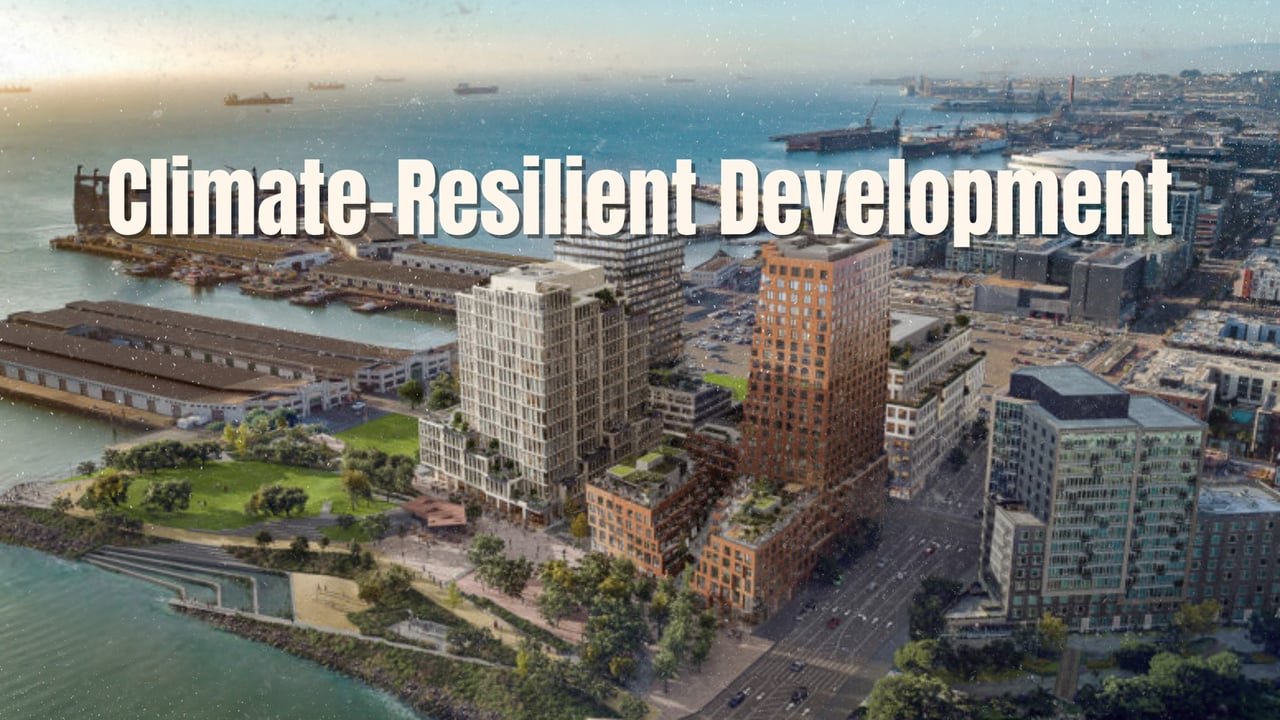
Climate-Resilient Development: Mission Rock’s Raised Site and District Energy System
The Mission Rock development in San Francisco is a groundbreaking project that combines urban development with sustainability. This massive, 28-acre mixed-use waterfront development is designed to not only meet the city’s housing and commercial needs but also to protect against the challenges posed by climate change, particularly rising sea levels. With a focus on climate resilience, Mission Rock’s raised site and district energy system offer a glimpse into the future of smart, sustainable urban planning.
Rising Sea Levels: The Challenge of Climate Adaptation
San Francisco, like many coastal cities, faces the growing threat of rising sea levels due to climate change. The city’s waterfront developments, such as Mission Rock, have taken proactive measures to mitigate these risks by integrating climate-resilient infrastructure into their designs.
Mission Rock’s unique adaptation strategy involved raising the entire site by approximately five feet using innovative materials. This design decision effectively creates a resilient barrier, protecting the development from flooding and storm surges, ensuring the long-term sustainability of the site.
Supporting Data:
-
According to the Urban Land Institute’s 2025 report, sea level rise is projected to increase by 12 inches by 2050, with some estimates reaching up to 36 inches by 2100.
-
As reported by the San Francisco Bay Conservation and Development Commission (BCDC), the city is prioritizing climate adaptation in its coastal urban developments to avoid future damage to property and infrastructure.
Mission Rock's Raised Site: Innovation for Resilience
To combat the risks of flooding and sea level rise, developers of Mission Rock employed an innovative solution: raising the entire site using lightweight glass aggregate and concrete fill. This technique not only raises the site but also reduces the environmental impact by utilizing recycled materials.
Key Features:
-
Heightened Site: The entire 28-acre development is raised by about five feet to provide natural flood protection.
-
Lightweight Aggregate: The fill material, which includes recycled glass and lightweight concrete, acts as a flood barrier while minimizing the weight on the foundation, reducing the risk of subsidence.
-
Environmental Impact: The use of sustainable materials aligns with California’s commitment to reducing greenhouse gas emissions and promoting green building practices.
Supporting Data:
-
According to the San Francisco Department of the Environment, the use of sustainable, low-carbon materials in construction can significantly reduce the carbon footprint of urban developments.
District Energy System: A Model for Sustainable Power
Another key element of Mission Rock’s climate-resilient development is the district energy system. This system uses centralized heating and cooling to serve the entire development, ensuring energy efficiency and reducing overall emissions. By utilizing a district energy system, Mission Rock is reducing its reliance on traditional, less efficient systems while contributing to a greener future.
Key Features of the District Energy System:
-
Heat Recovery: The system captures and repurposes waste heat from various buildings and processes to provide both heating and cooling to the development.
-
Renewable Energy Sources: The district energy system integrates renewable energy, including solar and geothermal power, to further reduce carbon emissions.
-
Efficiency: By centralizing energy production, Mission Rock minimizes energy losses and maximizes efficiency across the entire site.
Supporting Data:
-
According to the American Council for an Energy-Efficient Economy (ACEEE), district energy systems can reduce energy consumption by up to 20% compared to conventional energy systems.
-
The U.S. Green Building Council (USGBC) reports that such systems also significantly cut down on emissions, providing a sustainable solution for large-scale developments.
Impact on Real Estate and Future Developments
The innovative features of Mission Rock are likely to have a significant impact on future urban developments, especially in coastal cities. As more cities face the reality of climate change, Mission Rock offers a valuable blueprint for integrating sustainability with urban planning.
Key Takeaways:
-
Mission Rock’s raised site and district energy system showcase how real estate developers can prepare for the future by adopting climate-resilient infrastructure.
-
As sea level rise continues to threaten coastal areas, cities will increasingly look to Mission Rock as an example of how to integrate environmental sustainability with urban development.
-
By prioritizing sustainability, the Mission Rock development is likely to see long-term benefits, including increased property values, lower maintenance costs, and enhanced appeal for environmentally-conscious residents.
Mission Rock stands as a testament to what the future of urban development can look like when sustainability is prioritized. By addressing the challenges posed by rising sea levels and adopting advanced energy systems, this development is setting a standard for future projects across the globe. As climate change continues to shape the way cities are built, Mission Rock’s climate-resilient infrastructure and innovative solutions provide a blueprint for a sustainable, thriving future.